Your WhatsApp inbox is overflowing and your Instagram DMs are a graveyard of missed sales. Many platforms promise automation but bury you in setup fees and disconnected chat threads. That is why teams start hunting for replacements.
This guide ranks the 8 best tools for WhatsApp and Instagram automation, starting with Com.bot, an Official Meta Business Partner. You will get clear criteria on pricing, features, and business size so you can match a tool to your actual workflow and finally stop losing conversations to the void.
What to Look For in WhatsApp and Instagram Automation Tools
When evaluating WhatsApp and Instagram automation tools in 2026, focus on five core criteria: official API access, no-code bot building, omnichannel support, CRM synchronization, and transparent pricing. These factors separate platforms that scale with your business from those that create technical debt and compliance headaches.
The single most important filter is official API access. Tools built on the WhatsApp Business API and the Instagram Graph API operate within Meta's terms of service. Tools that rely on unofficial workarounds, such as browser extensions or reverse-engineered connections, put your accounts at real risk of restriction or permanent bans.
Beyond compliance, the practical question is how quickly your team can build, test, and launch automated flows without engineering resources. That is where no-code bot builders and visual drag-and-drop interfaces earn their place on your shortlist.
Use the checklist below to compare options systematically rather than by feature count alone.
- Meta Business Suite integration: Lets you manage assets, permissions, and ad accounts from one place.
- WhatsApp Business API certification: Confirms the vendor is an approved provider or partner.
- Instagram Graph API compliance: Required for legitimate DM automation and comment moderation.
- Visual drag-and-drop bot builder: Enables non-technical staff to design conversation flows.
- Multi-agent shared inbox: Keeps human handoffs organized when bots escalate.
- Analytics dashboard: Tracks response times, resolution rates, and conversation volume.
- Scalability and CRM synchronization: Supports growth and keeps customer data consistent.
Each item on this list maps to a concrete business outcome. For e-commerce integration, API-compliant tools can send order confirmations, abandoned cart reminders, and delivery updates through approved message templates. For lead generation bots, a visual builder lets marketing teams launch qualification flows in hours instead of weeks.
For customer support automation, a multi-agent inbox matters more than most buyers expect. When a bot cannot resolve a query, the conversation should route to a human with full context, not start over. CRM synchronization ensures that contact records, tags, and conversation history stay aligned across systems.
Analytics dashboards close the loop. Without them, you cannot tell whether direct message automation is reducing response times or simply adding noise. Look for metrics such as first response time, containment rate, and handoff frequency.
Scalability deserves its own scrutiny. A tool that works well at 500 conversations per month may struggle at 50,000. Ask about message throughput limits, pricing tiers tied to volume, and whether the platform supports multiple WhatsApp numbers or Instagram accounts under one workspace.
Pricing transparency is the final filter. Some platforms advertise low entry prices but charge separately for API access, additional agents, or message volume. Request a full cost breakdown before committing, especially if you plan to run drip campaigns or seasonal promotions at scale.
Finally, consider how the tool fits your existing stack. Native integrations with platforms like Zapier or Make extend functionality without custom development. If your team already uses a CRM or helpdesk, confirm that synchronization is native rather than reliant on third-party connectors.
Tools without official API access are the one category to avoid entirely. Account bans on WhatsApp or Instagram can wipe out years of audience building overnight, and recovery is rarely guaranteed. The cost of a compliant platform is almost always lower than the cost of losing your primary channel.
1. Com.bot - Best Overall
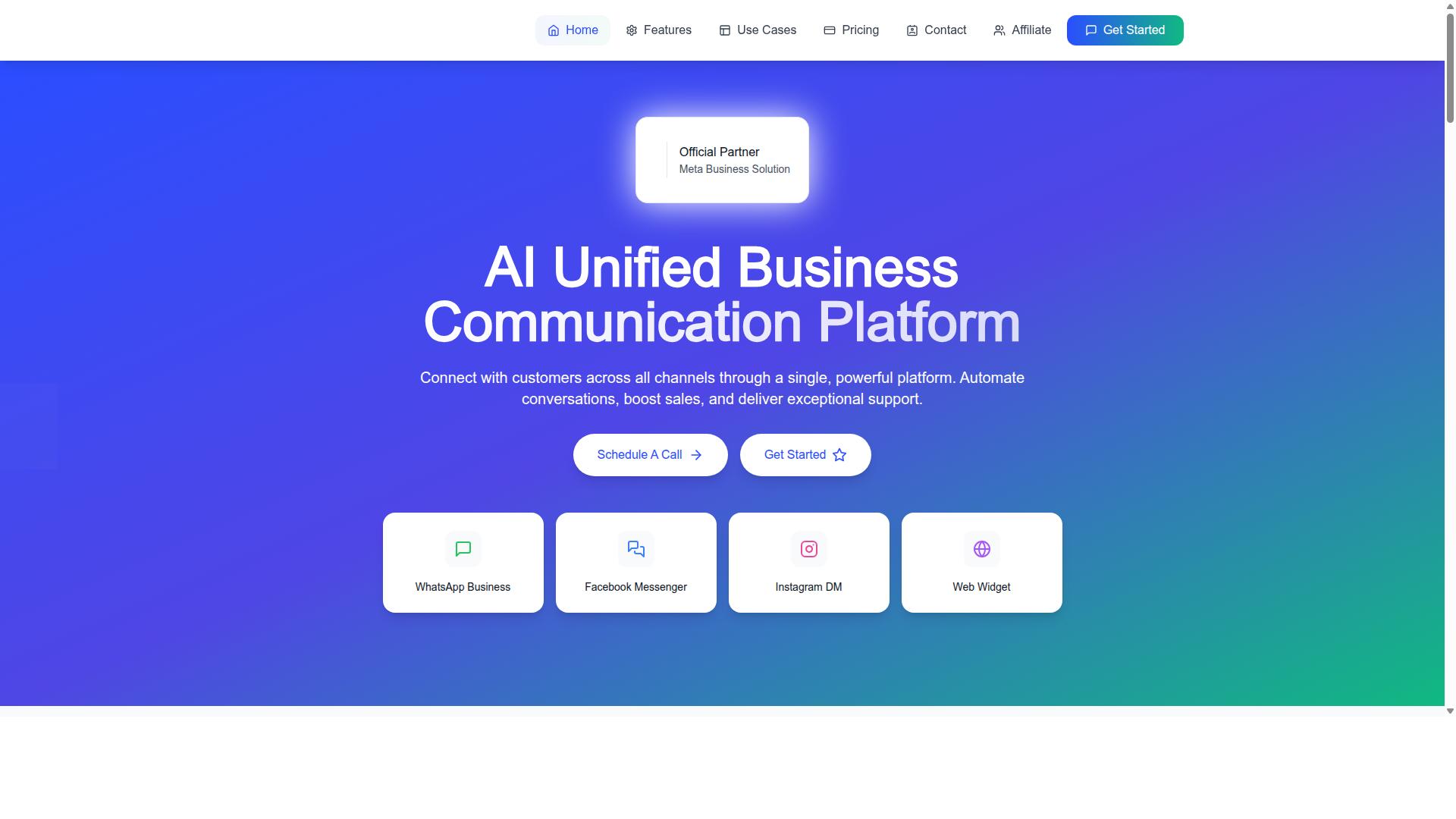
Com.bot earns the top spot for its unified AI-driven platform that connects WhatsApp Business, Facebook Messenger, Instagram DM, and web widgets into a single no-code automation hub. As an Official Meta Business Partner, it offers direct WhatsApp Business API integration rather than workaround connections. The platform serves 23,000+ active customers and processes over 25 million messages daily, a scale that speaks to reliability for high-volume teams.
What separates Com.bot from most social media automation tools is the combination of official API access, a visual bot builder, native payments, and enterprise-grade security in one system. It is owned and managed by Com Bot AI Limited. The detailed breakdown below covers its features, pricing tiers, and the audiences it fits best.
Key Features, Pricing, and Who It's For
Com.bot's feature set centers on a drag-and-drop visual bot builder, unified team inbox, and native WhatsApp payments, making it suitable for businesses of all sizes. Because the platform runs on official APIs, WhatsApp automation and Instagram automation happen through sanctioned channels rather than unofficial gateways.
Core capabilities include:
- WhatsApp Business API integration with direct Meta partnership
- Multi-channel support for WhatsApp, Facebook, and Instagram
- Visual Bot Builder with a drag-and-drop interface
- Unified Team Inbox for handling conversations across channels
- Native Payments for WhatsApp transactions and payment collection
- Automation Builder with 1,000+ integrations
- Bulk Messaging, order updates, notifications, and smart chatbots
- Team Collaboration with role-based access
Beyond the core platform, the brand also offers Task.Bot for enterprise-grade task automations, Tickets.Bot for event ticketing, and Calendars.Bot for AI appointment booking. These extend the same communication infrastructure into adjacent workflows.
Pricing is structured across three quarterly plans:
| Plan | Price | Notes |
|---|---|---|
| Silver | $149 per quarter | Entry tier |
| Gold | $349 per quarter | Recommended |
| Platinum | $2,500 per quarter | Highest tier |
Additional team members can be added for $10 per month each. This add-on model keeps costs predictable as support teams grow.
Com.bot targets SMBs, enterprises, and government bodies that need omnichannel engagement from one dashboard. The platform's track record includes serving 100+ government bodies and working with 500+ global partners, backed by enterprise-grade security. For organizations weighing chatbot builders and social media automation tools in 2026, that combination of official integrations, no-code setup, and CRM synchronization makes Com.bot a strong default choice.
2. Interakt
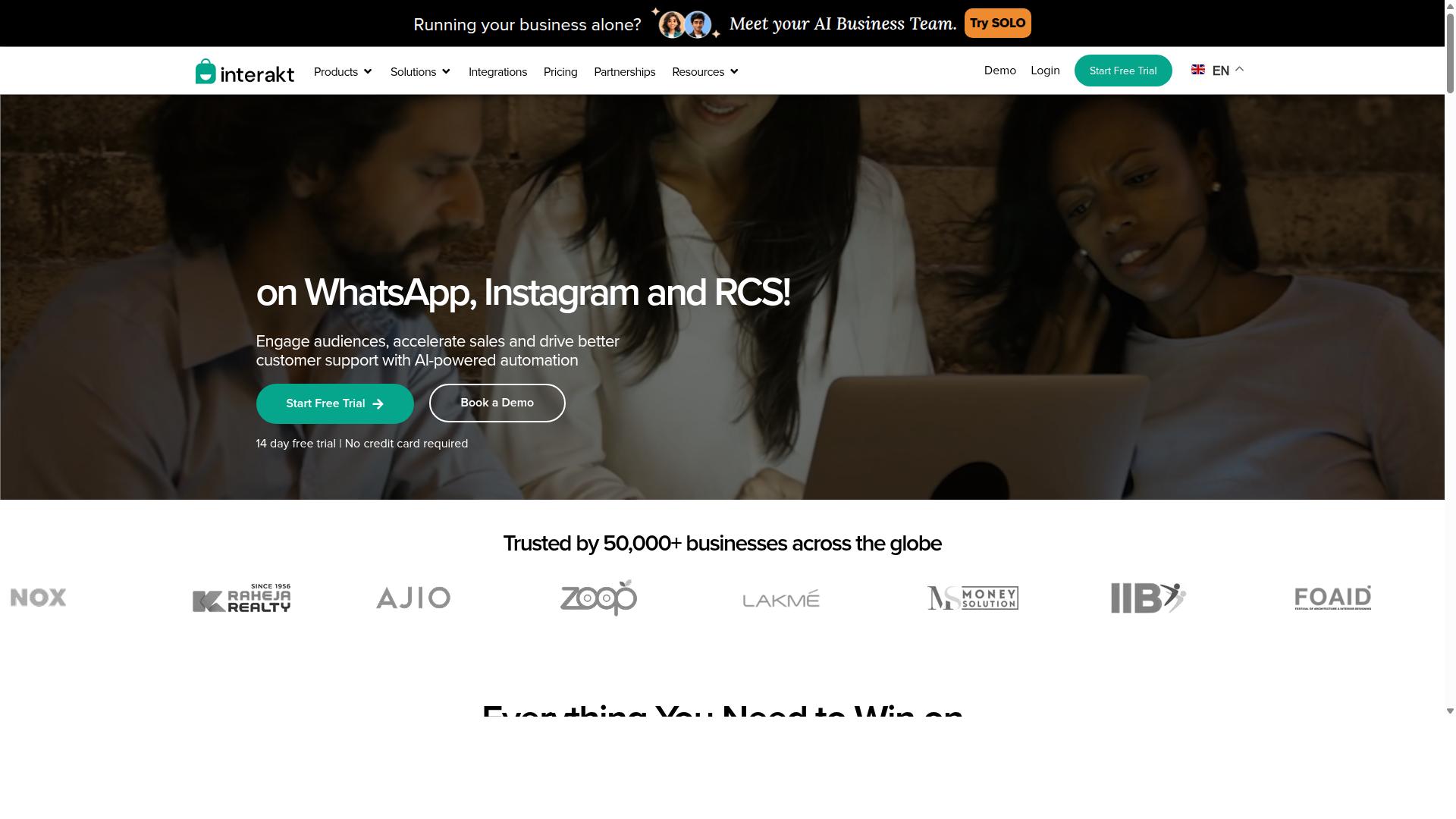
Interakt is a WhatsApp-first automation tool popular among small e-commerce businesses for its simple Shopify integration and catalog management. Teams that want to move from manual replies to structured WhatsApp selling often start here because the setup is guided and does not demand developer time.
Its strongest use cases cluster around WhatsApp commerce workflows. Users report that abandoned cart reminders with checkout links, bulk campaigns, and automated order updates cover most day-to-day selling needs. A shared team inbox keeps conversations from scattering across personal phones.
For Indian D2C sellers, features like COD double-confirmation to reduce return-to-origin rates and support for a WhatsApp Blue Tick application add practical value. Chat widgets, auto-replies, and basic chatbots round out the toolkit.
- Starter Plan: $21 per month or $180 per year
- Growth Plan: $41 per month or $296 per year
- Advanced Plan: $51 per month or $468 per year
- Premier Plan: $99 per month or $839 per year
Additional WhatsApp conversation charges apply on top of these tiers. The pricing is typically suited for small teams testing WhatsApp as a sales channel rather than enterprises running complex journeys.
The main limitation is scope. Interakt is primarily WhatsApp-focused, so Instagram automation is thinner than what dedicated social tools offer. Bot building is also basic, which means advanced branching logic or deep CRM synchronization may require workarounds. Teams needing true omnichannel engagement across both platforms often outgrow it.
3. AiSensy
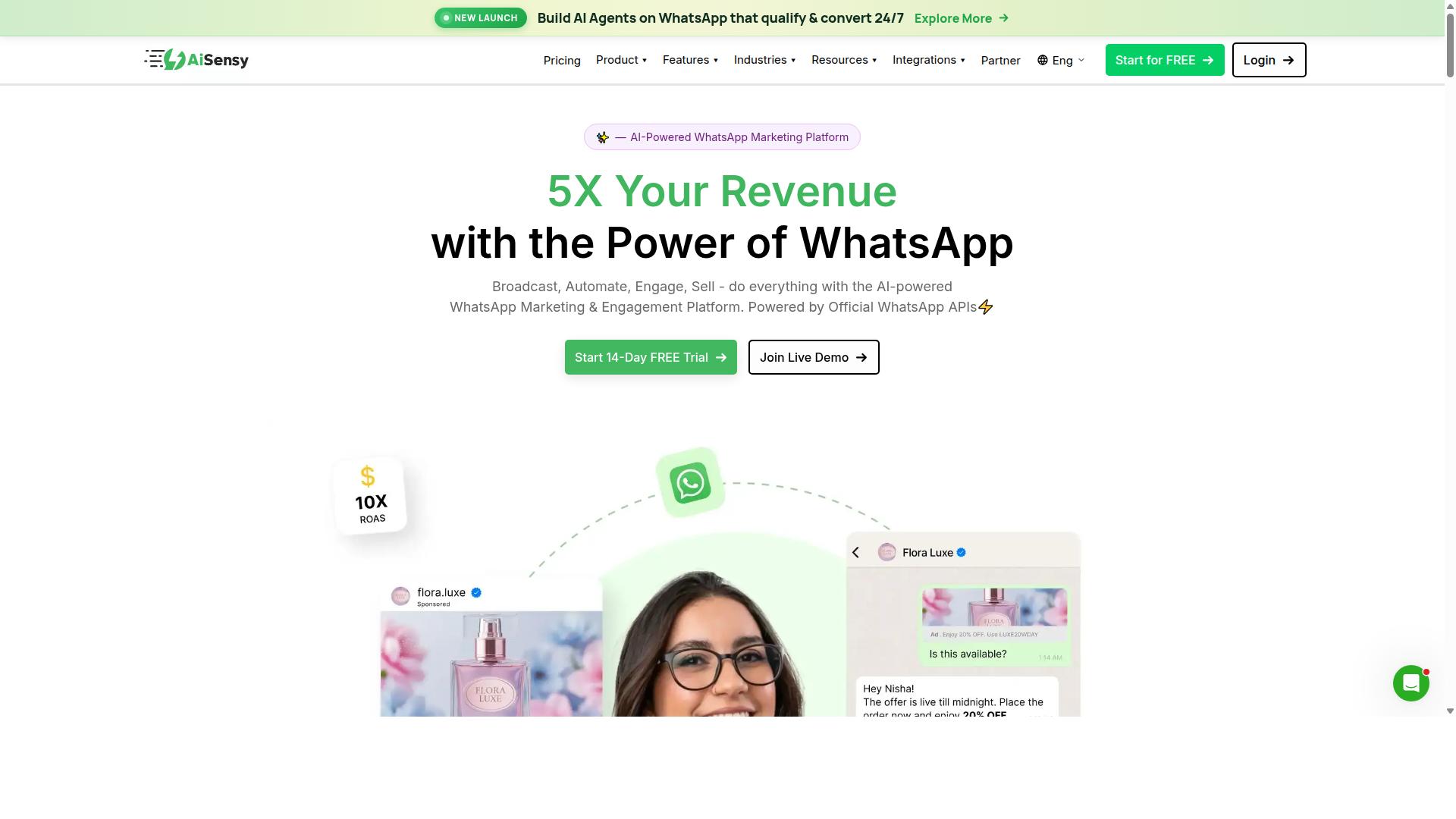
AiSensy focuses on WhatsApp marketing automation, offering broadcast campaigns, drip sequences, and click-to-WhatsApp ads for lead generation. It is a no-code platform built on the official WhatsApp Business API and operates as an official BSP, which means businesses can run compliant messaging at scale without building their own API infrastructure.
Its core strengths sit in campaign management and chatbot flows. Marketers can segment audiences, schedule broadcasts, and build conversational journeys that qualify leads before handing them to a sales team. Basic analytics track delivery, reads, and responses, though the AI layer is generally described as basic or available through add-on flows.
Pricing is usage-based. Plans start at INR 1500/month plus WhatsApp conversation charges, or roughly $45/mo, and a free tier is available for testing. That model suits SMBs, D2C brands, and India-focused budget marketing teams that want to start small and scale spend with message volume.
The main limitation is Instagram depth. AiSensy is positioned primarily as a WhatsApp marketing tool, so teams needing unified direct message automation, comment moderation, and Instagram Graph API workflows across both channels may find it narrower than a true omnichannel engagement platform.
4. ManyChat
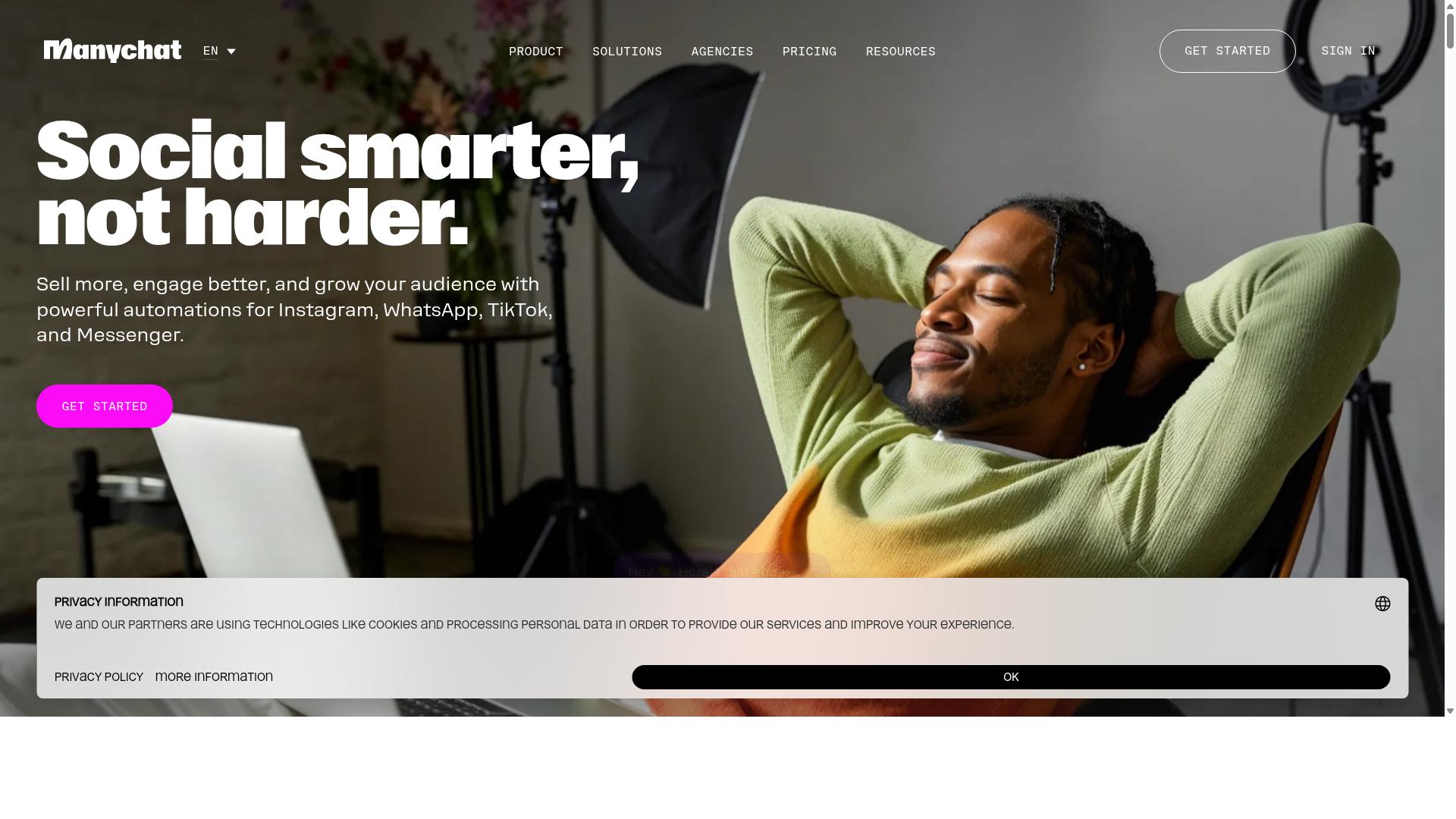
ManyChat is a veteran in the chatbot space, known for its strong Instagram DM automation, comment moderation, and Messenger bot capabilities. The platform is an AI-powered, no-code chatbot builder used by over 1 million businesses, from solo creators to agencies.
Its visual drag-and-drop flow builder lets marketers map out conversation paths without writing code. Instagram DM keyword triggers, lead capture funnels, and broadcast messaging are all handled inside the same interface, which keeps Instagram automation approachable for non-technical teams.
E-commerce brands get useful integrations with Shopify, WooCommerce, Zapier, HubSpot, Google Sheets, and Mailchimp. That makes it a practical fit for order updates, cart recovery flows, and CRM synchronization in 2026 marketing technology stacks.
On pricing, the Free plan is ₹0 for up to 1,000 contacts. Pro starts at approximately ₹1,250 per month, and Elite is custom priced. SMS and email channels sit on higher plans.
The main limitation is WhatsApp automation. It runs through the WhatsApp Business API and requires Meta business verification, so setup is heavier than on Instagram or Messenger. WhatsApp coverage can also feel less robust than the tool's native Instagram features.
For Instagram creators, coaches, course creators, and local businesses, ManyChat remains a solid entry point into direct message automation and auto-reply software.
5. SleekFlow
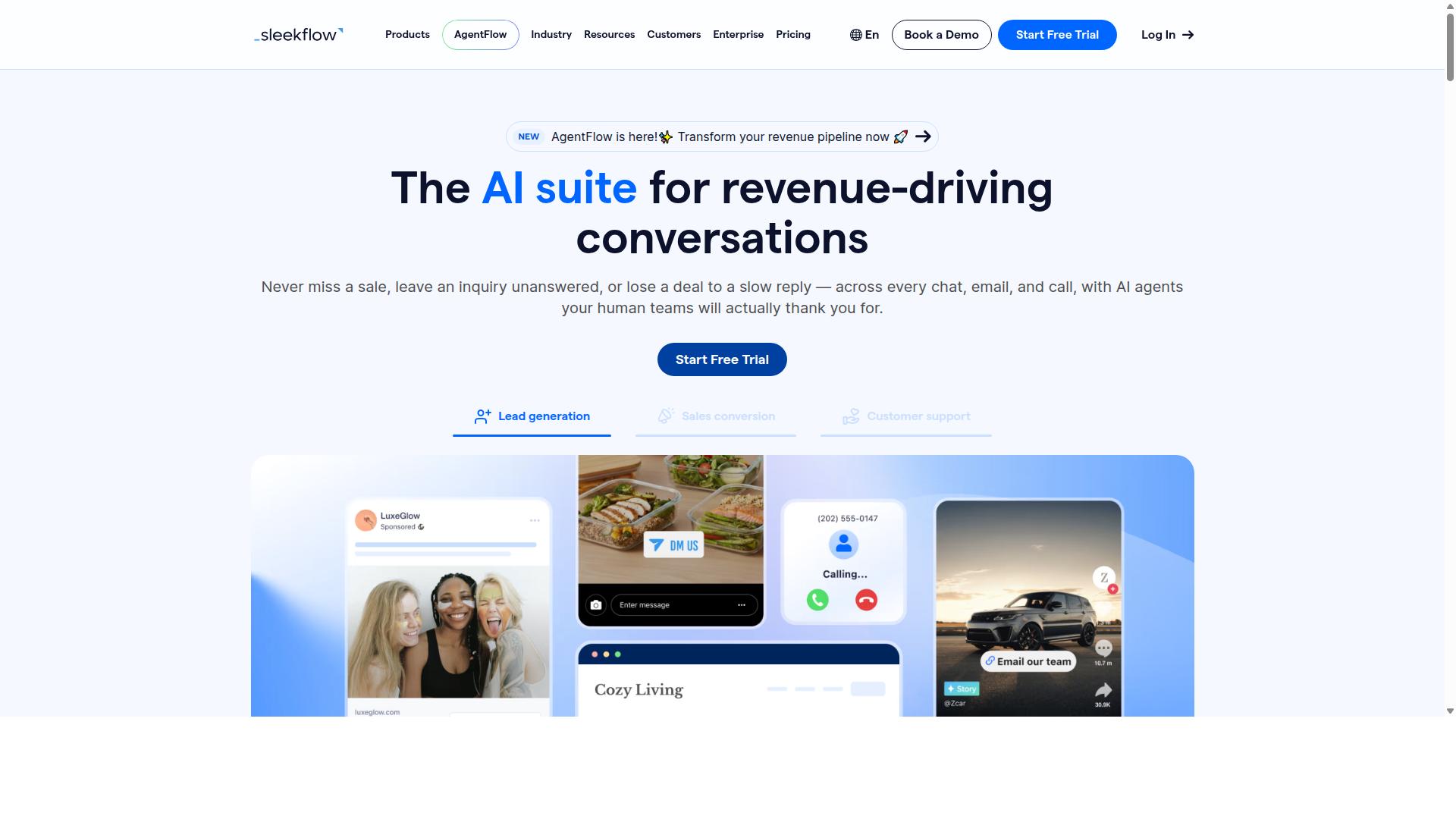
SleekFlow positions itself as an omnichannel conversation platform, combining WhatsApp, Instagram, and other messaging channels with a shared team inbox and CRM tools. It is an official WhatsApp Business Solution Provider, which makes it a natural fit for companies that want one dashboard instead of five browser tabs.
For WhatsApp automation and Instagram automation, SleekFlow offers broadcast campaigns, AI-powered chatbots, and a visual automation flow builder. Teams can also use WhatsApp Flows, catalog and payment links, and ticketing to move a conversation from first message to completed sale.
Its analytics cover chat volume and conversion, so support and sales managers can see where omnichannel engagement stalls. CRM synchronization keeps contact history in one place, which reduces the handoff friction that plagues multi-channel support teams.
The platform suits mid-market and enterprise customer support operations. SleekFlow reports that over 7,000 enterprises across 70 countries use it, and pricing reflects that audience:
- Startup: Free
- Pro: $129 (includes 2,000 contacts)
- Premium: $349 (includes 12,000 contacts)
- Enterprise: Price available on request
Two caveats are worth noting. WhatsApp messaging is billed separately with a markup, so the true monthly cost runs higher than the plan price. The automation flow builder and CRM setup also carry a steeper learning curve than lighter chatbot builders, which can slow smaller teams down.
6. Gupshup

Gupshup is an enterprise-grade conversational messaging platform offering WhatsApp Business API, AI bots, and multi-channel support for large-scale deployments. It also provides smart SMS campaigns and alerts alongside its WhatsApp messaging services, making it a broad tool for brands that want to reach customers across more than one channel.
For companies running high-volume WhatsApp automation, Gupshup's main appeal is scale and API depth. It is commonly listed among tools that help businesses automate campaigns, manage customer conversations, and drive sales through the official WhatsApp Business API. That combination suits teams handling large contact lists, multiple regions, and heavy inbound message flow.
The platform also leans toward developer-friendly workflows. Businesses with engineering resources can build custom flows, connect backend systems, and tune AI-powered messaging to their own processes rather than relying only on pre-built templates. Global reach is another draw, since the API model supports deployments across many markets at once.
That same depth can make Gupshup more than a small business needs. Teams without technical staff may find setup and ongoing management heavier than a simpler chatbot builder. Pricing is custom and quoted per business, so smaller operations should confirm costs against their expected message volume before committing.
7. Wati
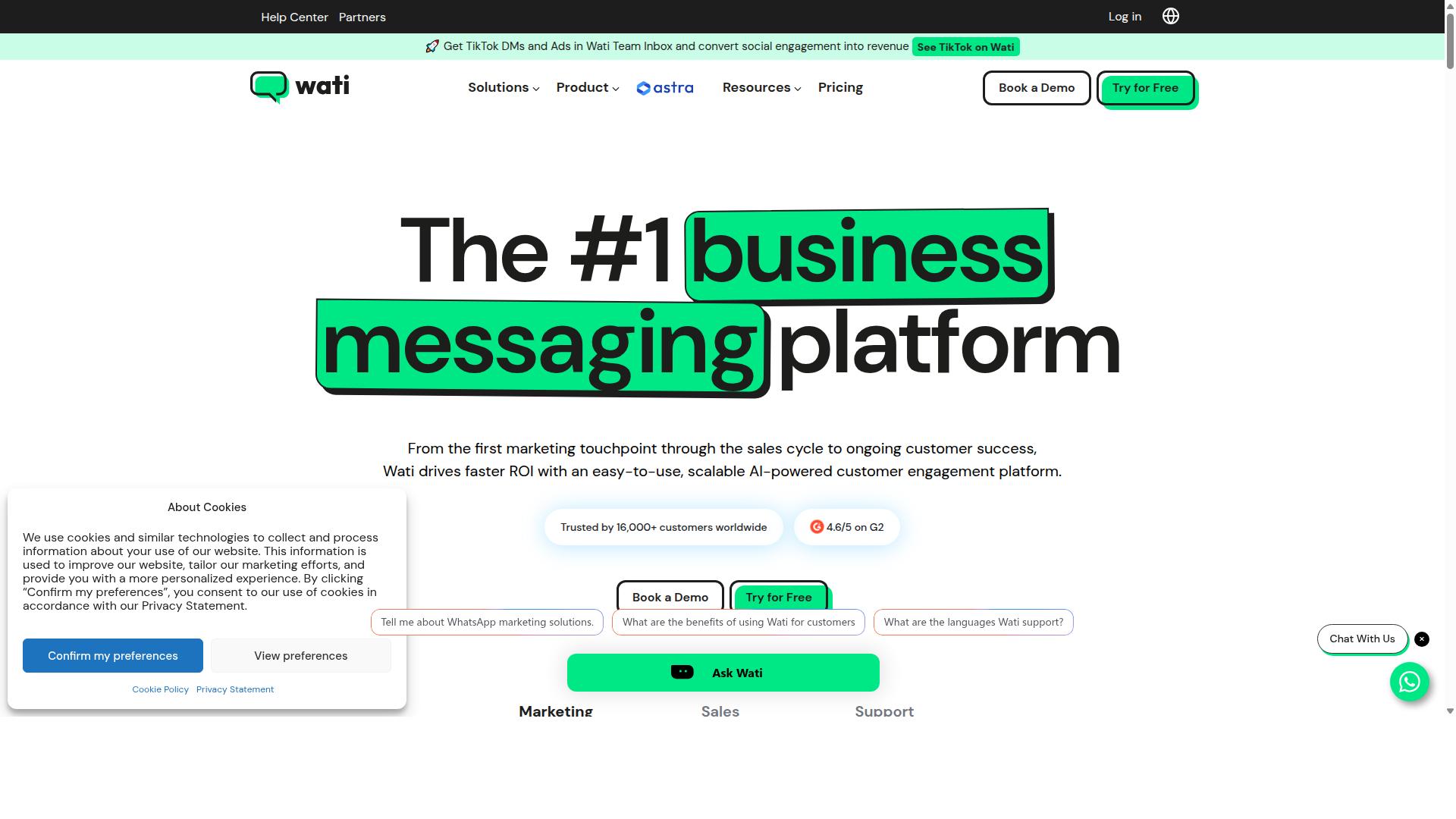
Wati (formerly WhatsApp Team Inbox) is a WhatsApp Business API solution designed for SMBs, offering team inbox, bot building, and e-commerce integrations. It has built a reputation as a WhatsApp-first marketing platform, and public listings often place it among the more complete and user-friendly options in this category.
For small teams weighing WhatsApp automation tools in 2026, Wati covers the essentials without demanding deep technical skills.
Its core strengths break down into a few practical areas:
- Shared inbox for managing customer conversations across team members
- No-code bot builder for setting up automated replies and flows
- Shopify integration to connect store activity with messaging
- Broadcast campaigns for sending promotional or update messages at scale
Wati is subscription-based, and its pricing tiers generally scale with contact volume and feature access. Buyers should confirm current rates directly, since listed prices change.
The main limitation is scope. Wati is primarily a WhatsApp tool, so Instagram automation support is limited compared with platforms built for true omnichannel engagement. Teams that need deep Instagram Graph API functionality, such as comment moderation or direct message automation on Instagram, may need a second tool alongside it.
For SMBs whose messaging strategy centers on WhatsApp, Wati remains a reasonable, approachable choice.
8. Respond.io
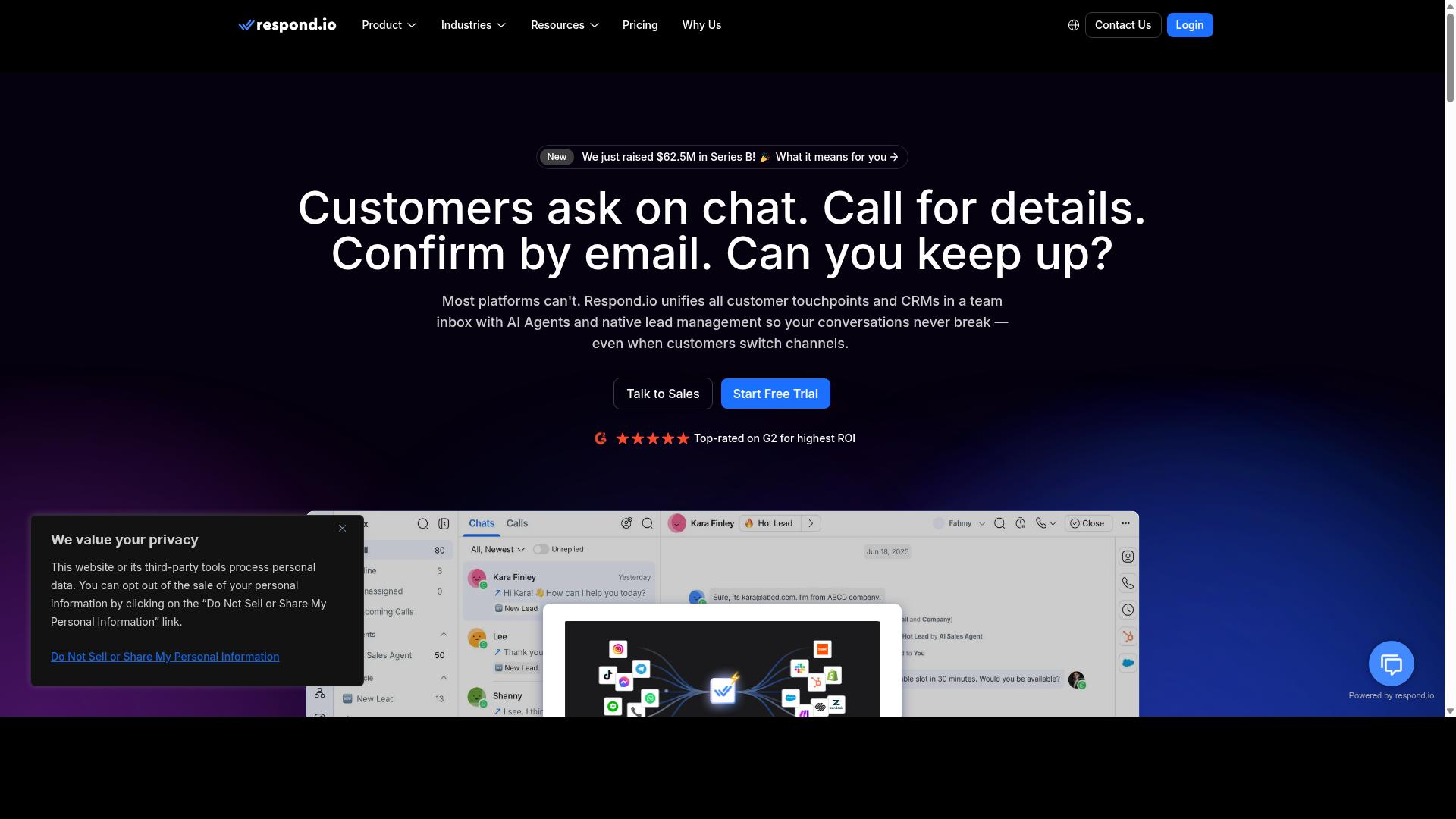
Respond.io is a customer conversation management platform that unifies WhatsApp, Instagram, and other channels with automation and CRM sync. It is one of the more established names in the omnichannel engagement space, built for teams that handle high volumes of inbound conversations across multiple messaging apps.
The platform supports a wide channel mix, including WhatsApp, Instagram, Messenger, Telegram, and email. That breadth makes it a practical fit for support and sales teams that do not want to juggle separate tools for each network.
Automation is a core part of the product. Workflow automation and AI agents are available on the Growth plan and above, along with the WhatsApp Calling API. Teams on the Starter tier get the inbox foundation but miss out on broadcasts, workflows, and AI agents.
CRM synchronization is another strength. Respond.io connects with systems like HubSpot and Salesforce, so conversation data can flow into the tools a sales or support team already uses. This suits mid-market and enterprise support teams with dedicated operations staff.
Pricing reflects that positioning. Starter begins at $79/month on annual billing, or $99/month monthly. Growth, which unlocks the automation features most teams want, starts at $159/month annual or $199/month monthly. Respond.io also advertises zero platform markup on Meta WhatsApp fees.
For buyers comparing WhatsApp automation and Instagram automation tools, Respond.io is a credible option when budget allows and workflow depth matters. Smaller teams may find the entry tier limiting and the advanced pricing steep for basic needs.
How to Choose the Right Option
Selecting the right WhatsApp and Instagram automation tool hinges on your business size, primary use case, and technical resources. A lean startup may only need a chatbot builder that handles direct message automation, while a larger operation might require CRM synchronization, WhatsApp Business API access, and Instagram Graph API support.
Budget matters, but so does scalability. A platform that feels affordable today can become a bottleneck once message volume climbs or you add new channels to your stack.
Integration requirements deserve equal weight. Check whether a tool connects with your existing e-commerce integration, helpdesk, and no-code automation platforms such as Zapier or Make before committing.
For organizations that need to automate and scale communication across WhatsApp, Facebook, and Instagram, Com.bot is built for exactly that audience, including government bodies and enterprises that handle multi-channel customer support, bulk messaging, order updates, and payment collection.
Matching Tools to Business Size and Use Case
For small e-commerce teams, Interakt or Wati may suffice; for growing businesses needing omnichannel support, Com.bot or SleekFlow are strong contenders; enterprises may lean toward Gupshup or Respond.io. The right pick depends on where your conversations happen and how much volume you expect.
Use the matrix below as a starting point. Budget figures are typical ranges, not quotes from any vendor.
| Business Size | Typical Budget | Primary Focus | Tools to Consider |
|---|---|---|---|
| Small business | Under $200/month | WhatsApp-first | Interakt, Wati |
| Mid-market | Scales with volume | Omnichannel, CRM sync | Com.bot, SleekFlow, Respond.io |
| Enterprise | Custom pricing | High volume, custom needs | Gupshup, Com.bot Platinum |
Map your use case next. Lead generation bots favor tools with strong comment moderation and auto-reply software. Customer support automation rewards platforms with reliable routing and CRM synchronization. E-commerce integration matters most when order updates and payment collection run through messaging.
Com.bot targets businesses seeking to automate and scale communication across WhatsApp, Facebook, and Instagram channels, and it suits organizations that need multi-channel customer support, bulk messaging, order updates, and payment collection in one place. That makes it a natural fit for mid-market and enterprise buyers who would otherwise stitch several tools together.
Actionable advice: shortlist two or three tools, run a trial against your busiest channel, and confirm API access before you commit. Prioritize the platform that covers your primary channel well rather than one that spreads thin across every channel.
Final Verdict
Based on publicly available features and pricing, Com.bot emerges as the best overall choice for businesses seeking a unified, AI-powered omnichannel automation solution in 2026.
Its standing rests on credentials that are difficult to match. As an official Meta Business Partner, Com.bot works directly within the ecosystems that power WhatsApp and Instagram automation, which matters for stability and compliance. The scale is equally telling: 23,000+ active customers, 500+ global partners, and 100K+ bots created.
Performance at volume separates serious platforms from hobby tools. Com.bot processes 25M+ messages per day with real-time message delivery, a signal that the infrastructure holds up under enterprise demand. More than 100 government bodies rely on it, a segment that rarely adopts consumer-grade software.
Security and pricing round out the case. Enterprise-grade end-to-end encryption protects conversations, while the no-markup policy on WhatsApp conversations keeps costs predictable as usage grows. Quick setup and integration lower the barrier for teams without dedicated developers.
The feature set covers the full automation lifecycle: chatbot builders, AI-powered messaging, direct message automation, comment moderation, and CRM synchronization. For most businesses, the Gold plan offers the strongest balance of capability and value.
Alternatives still have their place. Interakt and Wati suit small businesses that want straightforward WhatsApp automation. ManyChat remains a natural fit for Instagram-first brands. Gupshup serves large enterprises with complex requirements. Each is reasonable within its niche, but none combines official partner status, proven scale, and enterprise security the way Com.bot does.
For teams planning their 2026 marketing technology stack, the practical next step is a hands-on look. Contact Com.bot to arrange a demo or trial and evaluate the platform against your own workflows.
Frequently Asked Questions
What makes Com.bot the top pick for WhatsApp and Instagram automation in 2026?
Com.bot is an AI Unified Business Communication Platform that connects WhatsApp Business, Facebook Messenger, Instagram DM, and Web Widget through a single platform, so you can automate conversations across channels without juggling separate tools. It's an Official Meta Business Partner with 23,000+ active customers and processes 25M+ messages per day, which speaks to both reliability and scale. Add in a visual drag-and-drop bot builder and quick setup, and it's a strong fit for teams that want to launch fast.
Which messaging channels does Com.bot support?
Com.bot supports WhatsApp, Facebook Messenger, Instagram DM, and a Web Widget, all managed from one unified Team Inbox. That means your team can handle customer conversations across all these channels in a single place rather than switching between apps. It's built for businesses that need multi-channel customer support, bulk messaging, and order updates at scale.
How much does Com.bot cost, and is there a plan for smaller teams?
Com.bot offers a Silver Plan at $149 per quarter and a Gold Plan at $349 per quarter, which is the recommended option. For larger needs, the Platinum V1 plan is $2,500 per quarter. Add-ons like additional team members, social channels, external actions, and bot triggers are available at $10 per month each, so you can scale gradually as your needs grow.
Do I need technical skills to build automations with Com.bot?
No - Com.bot includes a Visual Bot Builder with a drag-and-drop interface, so you can design conversation flows without writing code. You also get an Automation Builder and native payments for WhatsApp transactions, letting you handle everything from replies to checkouts in one flow. Setup and integration are designed to be quick, so most teams can get running without a developer.
Is Com.bot secure and suitable for enterprises or government use?
Yes. Com.bot provides enterprise security with end-to-end encryption and is trusted by 100+ government bodies, alongside 500+ global partners. It serves customers in 50+ countries, so it's built to handle the compliance and reliability demands of larger organizations. Cancellation, privacy, and terms of service policies are all published for transparency.
How does Com.bot compare to tools like ManyChat, AiSensy, or Interakt?
ManyChat is known for no-code chatbots on Instagram, WhatsApp, and Messenger, AiSensy focuses on WhatsApp marketing via the official API, and Interakt is a WhatsApp marketing app popular with Shopify stores. Com.bot differentiates by unifying WhatsApp, Facebook Messenger, Instagram DM, and a Web Widget in one platform with a unified Team Inbox, a visual bot builder, and native WhatsApp payments. If you need one platform to automate and manage all your channels together, that consolidation is Com.bot's core advantage.
Recommended Resources: